
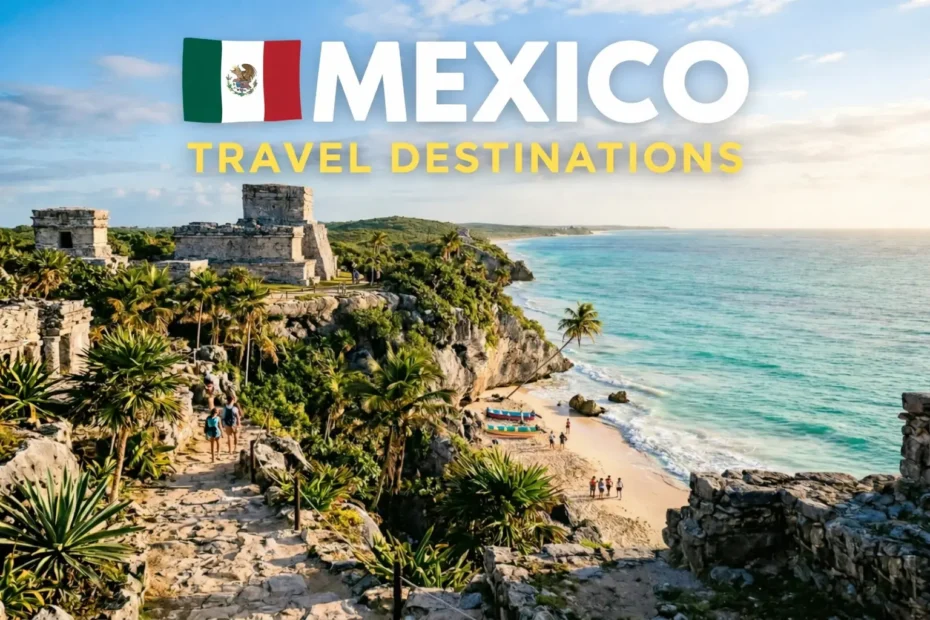
Mexico rewards travelers who go in with a plan. It is the 13th-largest country on earth, spanning arid deserts in the north, high-altitude colonial cities in the central plateau, dense jungle and Mayan ruins in the Yucatán, and two coastlines that could not look more different from one another. Picking the “right” destination is less about finding a single best spot and more about matching the region to the kind of trip you actually want.
This guide is written for international travelers, whether you are flying in from Europe, Asia, South America, the Middle East, or North America, who want a clear-eyed overview of where to go, what each place actually offers, and the practical things most generic travel articles gloss over. No fluff, no breathless adjectives. Just the information that helps you decide.
How to Choose the Right Region in Mexico
Before naming individual cities, it helps to understand the broad geography. Mexico’s tourism roughly divides into five zones, each with a distinct character.
The Yucatán Peninsula (Cancún, Tulum, Mérida, Cozumel) is the Caribbean-facing side, with warm water, white sand, Mayan archaeology, and cenotes. The Pacific coast (Puerto Vallarta, Cabo San Lucas, Puerto Escondido, Sayulita) runs along the western edge, known for surfing, dramatic sunsets, and whale-watching in season. The Central Highlands (Mexico City, Oaxaca, San Miguel de Allende, Guanajuato) is where Mexico’s cultural and culinary weight lives. Baja California Sur (La Paz, Loreto, Cabo) offers desert-meets-sea landscapes and world-class diving. And the Gulf and southern states (Veracruz, Chiapas) remain more off-the-beaten-path, rewarding travelers willing to trade polish for authenticity.
A common mistake first-time visitors make is assuming Mexico is small enough to “see” in a single trip. It is not. A focused itinerary covering two complementary regions — say, Mexico City paired with Oaxaca, or Cancún paired with Mérida — almost always produces a better trip than a frantic multi-region loop.
Best Beach Destinations in Mexico
Mexico’s coastlines are what put it on most travelers’ maps, and for good reason. But the beaches on the Caribbean side feel nothing like those on the Pacific, and the resort towns vary enormously in price, crowd, and character.
Cancún and the Riviera Maya
Cancún remains the easiest entry point for first-time travelers to Mexico. Direct flights arrive from dozens of international hubs, the hotel zone is tightly regulated, and English is widely spoken. All-inclusive resorts dominate the market, and competition keeps prices reasonable compared to comparable Caribbean destinations. The broader Riviera Maya, an 80-mile stretch running south from Cancún to Tulum, gives you access to cenotes, the Mesoamerican Barrier Reef (the second-largest in the world), and Mayan sites including Tulum’s cliffside ruins and Chichén Itzá, a few hours inland.
If you want minimal friction and maximum beach time, base yourself here. If you want a deeper cultural experience, use it as a launching point rather than the whole trip.
Tulum
Tulum has changed significantly over the past decade. What was once a bohemian beach town is now a polished destination with boutique eco-resorts, high-end restaurants, and prices that often match or exceed those in Miami. The beach itself is still beautiful, the cenotes nearby are genuinely remarkable, and the Mayan ruins overlooking the sea are one of the most photogenic archaeological sites in the country. Go in knowing it is no longer a budget destination.
Los Cabos
At the tip of the Baja California peninsula, Los Cabos (the twin towns of Cabo San Lucas and San José del Cabo) offers a dramatically different aesthetic: desert cliffs meeting the Sea of Cortez, luxury resorts lining the corridor between the two towns, and a calendar full of fishing tournaments and golf. Whale-watching from December through April is exceptional. This is a destination where booking ahead genuinely matters, as accommodation tends to fill during peak season.
Puerto Vallarta
On the Pacific mainland, Puerto Vallarta strikes a rare balance between resort infrastructure and an intact, walkable old town. The Malecón boardwalk, the cobblestone streets of the Zona Romántica, and the nearby jungle-backed beaches of Nayarit give the area more texture than Cancún. Puerto Vallarta is also widely recognized as one of Latin America’s most welcoming destinations for LGBTQ+ travelers.
Best Cultural and Historic Destinations
Mexico’s coast gets the attention, but the country’s cultural heartland is inland. For travelers whose idea of a great trip involves food, architecture, and history rather than a beach chair, these are the destinations to prioritize.
Mexico City
Mexico City is one of the great world capitals and has quietly become one of the most interesting travel destinations anywhere. The food scene ranges from 50-peso street tacos to multiple restaurants ranked among the world’s best. Neighborhoods like Roma, Condesa, Coyoacán, and Polanco each have distinct personalities. The Anthropology Museum is genuinely one of the finest museums in the Americas, and the pyramids of Teotihuacán sit less than an hour outside the city.
Mexico City is also a major host for the FIFA World Cup 2026 (June 11 to July 19), with matches at the recently upgraded Estadio Azteca, including the opening match. Travelers visiting during that window should book accommodation and flights well in advance and expect premium pricing.
Oaxaca
Oaxaca is the destination most serious travelers recommend once they have been there. The city itself is a UNESCO-listed colonial center with extraordinary food; it is the home of mole, tlayudas, mezcal, and some of the most distinctive regional cuisine in Latin America. The surrounding state offers the Monte Albán archaeological site, indigenous craft villages, and the Oaxacan Pacific coast (Puerto Escondido, Mazunte) for travelers who want to combine culture with beach time. The Day of the Dead celebrations here, in late October and early November, are among the most powerful cultural experiences you can have in Mexico.
San Miguel de Allende
In Mexico’s central highlands, San Miguel de Allende is a preserved colonial town that has long attracted artists, retirees, and travelers looking for a slower pace. Cobblestone streets, pastel-painted buildings, and a temperate year-round climate make it an easy place to spend several days. Hot springs, vineyards, and horseback riding in the surrounding countryside round out the offering.
Mérida
The capital of Yucatán state is an increasingly popular alternative to the Riviera Maya coast. Mérida offers a safe, walkable colonial center, excellent Yucatecan cuisine, and day-trip access to Chichén Itzá, Uxmal, and cenotes in nearby haciendas. Summers are genuinely hot; winters are ideal.
Off-the-Beaten-Path Destinations Worth Considering
For travelers on a second or third trip to Mexico, the best experiences often come from stepping outside the main tourist circuit.
Loreto, Baja California Sur
A quiet town on the Sea of Cortez with pristine beaches, a marine protected area offshore, and a fraction of the crowds of Cabo. Ideal for travelers who want nature over nightlife.
Guanajuato
A former silver-mining city in the central highlands, built into a series of canyons with colorful facades and underground tunnels. Less polished than San Miguel de Allende, and arguably more interesting for it.
Puerto Escondido
On the Oaxacan Pacific coast, Puerto Escondido has become one of the world’s top surfing destinations. The waves at Zicatela are legendary; the town itself retains a laid-back character despite growing popularity.
Copper Canyon (Barrancas del Cobre)
In the northern state of Chihuahua, this canyon system is roughly four times the size of the Grand Canyon. The scenic train journey on El Chepe is one of the great rail trips in the Americas and passes through indigenous Rarámuri communities.
Practical Advice for Traveling to Mexico
This is the section most generic articles skip. It is also the most useful.
Entry Requirements
Most travelers from the United States, Canada, the United Kingdom, the European Union, Australia, New Zealand, Japan, and several other countries can enter Mexico visa-free for tourism stays of up to 180 days. Travelers from many South Asian, African, and some Middle Eastern countries do need to apply for a visa in advance; however, if you hold a valid US, Canadian, UK, Schengen, or Japanese visa, you are generally exempt from needing a separate Mexican visa. Always verify requirements for your specific passport with a Mexican consulate before booking.
All travelers must complete the FMMd (digital tourist card) either online before departure or at the airport on arrival. Keep a copy; losing it results in a replacement fee and delays when you exit. Your passport should be valid for the duration of your stay, and passport cards are not accepted for air travel.
Safety: An Honest Assessment
Mexico’s safety picture is more nuanced than headlines suggest. Violent crime is real and concentrated in specific regions, most of which are not tourist destinations. The US State Department and the Canadian and Australian governments publish state-by-state advisories, and these are the right place to start, not final verdicts, but useful context.
Major tourist zones, such as Cancún, the Riviera Maya, Los Cabos, Mexico City’s central neighborhoods, Mérida, Oaxaca city, and San Miguel de Allende, are well-policed and see millions of visitors annually without incident. Following standard travel precautions (use ride-share apps or official taxis, avoid isolated areas at night, do not display valuables, purchase comprehensive travel insurance with medical evacuation coverage) handles the vast majority of risk.
Petty scams, particularly wristband scams in resort zones, ATM skimming, and fake “closed for maintenance” claims designed to redirect you to commission-paying vendors, are the more common practical concerns for tourists. Book tours through established operators rather than street promoters.
Best Time to Visit
The dry season from November through April offers the most reliable weather across most of the country and is peak tourist season on both coasts. Hurricane season runs from June through October on the Caribbean coast; the Pacific is less affected. The shoulder months of April–May and October–November often hit the sweet spot: good weather, fewer crowds, and meaningfully lower prices. Highland destinations like Mexico City and Oaxaca are pleasant year-round, with a rainy season that typically means short afternoon storms rather than washouts.
Budget Expectations
Mexico remains a good value relative to comparable destinations. A realistic daily budget for a comfortable mid-range trip, quality hotels, good restaurants, activities, and local transport runs roughly USD 80–150 per person per day outside of premium destinations like Tulum or Cabo, where costs can easily double. Backpacker budgets of USD 40–60 per day are achievable in most of the country with hostels and street food.
Frequently Asked Questions
Is Mexico safe for tourists in 2026?
For the major tourist destinations, yes, with standard precautions. Safety varies significantly by state and sometimes by neighborhood. Check your home country’s official travel advisory, stick to established tourist areas, avoid driving at night in unfamiliar regions, and purchase comprehensive travel insurance. Most travelers have trouble-free trips.
Do I need a visa to visit Mexico?
Citizens of the US, Canada, UK, EU member states, Australia, New Zealand, Japan, and many Latin American countries can enter visa-free for up to 180 days. Travelers from many other countries need to apply in advance, though holding a valid US, Canadian, UK, Schengen, or Japanese visa often exempts you. Verify your specific situation with a Mexican consulate before booking.
What is the best time of year to visit Mexico?
November through April is the most reliable period for weather across most of the country. April–May and October, November offer the best balance of good conditions, fewer crowds, and lower prices. Avoid the Caribbean coast during peak hurricane months of September and October if possible.
How many days do I need in Mexico?
A focused trip to one region works well in 7-10 days. Two complementary regions, a city plus a beach, or two cultural destinations, ideally need 10-14 days. Mexico is too large to cover comprehensively in a single trip; most experienced travelers return multiple times.
Is it safe to drink the tap water?
No. Stick to bottled or filtered water throughout Mexico, including for brushing teeth in budget accommodations. Most mid-range and higher hotels provide filtered water. Ice in established restaurants in tourist areas is generally safe, as it is typically made from purified water.
Should I learn Spanish before going?
You do not need to, but even basic phrases improve the experience significantly outside major tourist zones. In Cancún, Los Cabos, and tourist areas of Mexico City, English is widely spoken. In Oaxaca, smaller towns, and off-the-beaten-path destinations, Spanish becomes genuinely useful.
Will the 2026 FIFA World Cup affect my travel plans?
Yes, if you are traveling between June 11 and July 19, 2026. Mexico City, Guadalajara, and Monterrey are host cities, and flights, hotels, and local prices will be significantly affected in those metros and on peak match dates. Book early if traveling during this window, or consider destinations away from host cities.
For more informational articles, please visit Blogging From Bolivia