
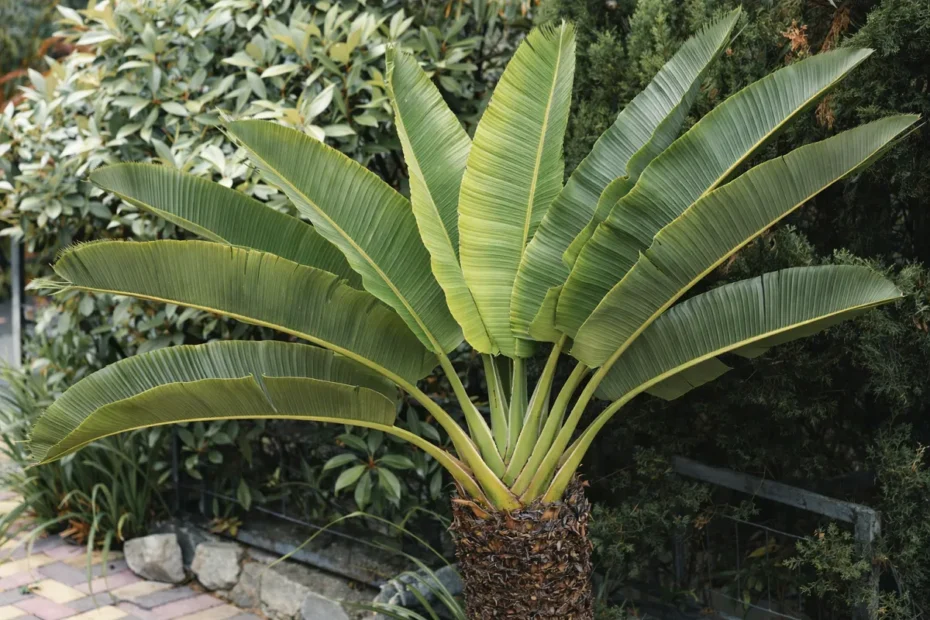
Few plants command attention the way the traveler’s palm does. With its colossal, paddle-shaped leaves arranged in a single flat plane, almost like a peacock’s tail rendered in green, it is one of the most photographed tropical plants on earth. Yet despite its name and appearance, this botanical showstopper is not a palm at all. Understanding what the traveler’s palm actually is, where it thrives, and how to care for it properly is the difference between a landscape centerpiece that lives for decades and a stressed, tattered plant struggling in the wrong spot.
This guide draws on horticultural references, extension service data, and established nursery practice to give you a grounded, practical look at the traveler’s palm plant, whether you’re considering one for a tropical garden, a large conservatory, or a bright indoor space.
What Is the Traveler’s Palm Plant?
The traveler’s palm, botanically known as Ravenala madagascariensis, is a striking flowering plant native to Madagascar. Although it carries “palm” in its common name, it belongs to the family Strelitziaceae, the same family as the bird of paradise, and is more closely related to bananas than to true palms. Some taxonomic sources also link it to the ginger family group of monocots, underscoring just how distinct it is from the Arecaceae palms it resembles from a distance.
The plant produces a dense, flat fan of long-stemmed leaves emerging from a central crown. Mature specimens can carry more than thirty fronds at once, with individual leaves reaching over ten feet in length. Over time, the lower leaves drop away to expose a smooth, ringed trunk that can eventually push the plant past thirty feet in height, and in tropical conditions, considerably taller.
Why It’s Called the “Traveler’s” Palm
The name has two widely cited origins. The first, and most reliably documented, relates to water storage. The cupped bases of the leaf stalks and the bracts surrounding the flowers collect and hold significant amounts of rainwater, by some accounts, up to half a gallon in a mature plant. Parched travelers in Madagascar historically punctured the stem or tapped the leaf bases for an emergency drink of relatively clean water.
The second explanation is more folkloric: the fan of leaves is said to orient itself along an east-west axis, serving as a natural compass for lost wanderers. Horticulturists generally treat this as a charming myth rather than a reliable fact. The plant does tend to align its fan in a consistent direction within a given location, but the orientation varies and is not a dependable navigation aid.
Native Habitat and Natural Growth
The traveler’s palm is endemic to Madagascar, where it grows in humid coastal regions, rainforest clearings, and disturbed ground with ample sunlight. It has since been introduced to warm regions worldwide, including South Florida, the Caribbean, Southeast Asia, coastal Australia, and subtropical parts of Africa, where it is grown as a dramatic ornamental.
In its native range, the plant is an important ecological player. Ruffed lemurs pollinate their creamy-white, bird-of-paradise-like flowers, and the coevolution between the plant’s inflorescence structure and the lemur’s feeding behavior is well documented. After pollination, the flowers produce seed pods containing seeds wrapped in a vivid electric-blue aril, one of the few true blue pigments found in the plant kingdom.
Climate and Hardiness Requirements
Traveler’s palm is strictly a warm-climate plant. It is best suited to USDA hardiness zones 10 and 11, where frost is rare or absent. Gardeners in zone 9b, particularly coastal areas, can sometimes succeed with it, but only with protection during cold snaps. The plant generally does not tolerate temperatures below about 40°F (4°C) without leaf damage, and extended cold causes severe setback or death.
For those outside these zones, the traveler’s palm can still be grown, but it will need to spend winters in a heated greenhouse, conservatory, or very bright indoor space. Its eventual mature size makes long-term indoor cultivation a serious commitment.
How to Grow a Traveler’s Palm: A Practical Care Guide
Light Requirements
Traveler’s palm is a sun-loving plant. Mature specimens thrive in full sun, while younger plants appreciate some light afternoon shade as they establish. Indoors, it needs the brightest location you can provide, ideally within a foot of a large south-facing window, a sunroom, or under a skylight. Low-light situations will produce weak, stretched growth and thin, pale leaves.
Outdoor Placement
When planting outdoors, choose a spot sheltered from strong winds. The large leaves are physically delicate and shred easily in exposed sites, which leaves the plant looking ragged even when healthy. Allow at least 8 to 10 feet of clearance from buildings, walls, and other large plants; 12 feet is better. The crown spreads wider than most gardeners anticipate, and the root system, while not aggressive, benefits from open ground.
Soil and Drainage
The traveler’s palm prefers rich, loamy soil with a mildly acidic pH and good moisture retention. While it appreciates consistent moisture, it is sensitive to waterlogged roots. A blend of quality potting mix or garden loam enriched with compost, and amended with perlite or coarse sand for aeration provides the balance it needs. For container growth, always use a pot with ample drainage holes.
Watering
As a rainforest-edge native, the traveler’s palm likes to stay evenly moist without becoming soggy. The reliable rule is to water when the top one to two inches of soil have dried out. In hot weather or during active growth, this may mean watering several times a week outdoors; indoors, it typically translates to a weekly watering schedule, adjusted for pot size and humidity.
Overwatering is the single most common cause of decline, particularly in container-grown specimens. Standing water in a drainage tray is a frequent culprit; always empty it after watering.
Fertilization
Feed the traveler’s palm three times per year, in spring, summer, and autumn, using a balanced, all-purpose fertilizer or one formulated for palms and tropical plants. Nitrogen-rich formulations support the lush foliar growth for which the plant is grown. Skip feeding in winter when growth naturally slows. Over-fertilizing causes leaf-tip burn and browning margins, so follow label rates rather than guessing upward.
Temperature and Humidity
Ideal growing temperatures sit between 65°F and 85°F (18°C to 29°C). The plant becomes stressed below roughly 60°F and may sustain damage below 50°F. Humidity of around 50% or higher suits it well; in dry indoor environments, especially those with forced-air heating or air conditioning, a humidifier or regular misting helps prevent leaf yellowing and crisp edges.
Pruning
Minimal pruning is the norm. Remove old, fully yellowed, or damaged leaves at the base of the stem using clean, sharp pruners. You can also trim away root suckers at the base of the trunk if you want to maintain a single-trunked, architectural look. Avoid heavy pruning, which stresses the plant unnecessarily.
Propagation
The most reliable propagation method is the division of the basal offshoots that form around the mother plant. Carefully separate a rooted sucker with a portion of its own root system, and pot it into moist, well-aerated soil. Seeds can also be germinated, but the process is slow and requires warmth and patience.
Common Problems and How to Solve Them
Yellowing Leaves
Yellowing is usually caused by overwatering, poor drainage, or nutrient deficiency. Check soil moisture at root depth before adding more water, ensure drainage holes are clear, and review your fertilizing schedule. Older, lower leaves turning yellow one at a time is a normal part of the plant’s life cycle and not a concern.
Brown, Crispy Leaf Edges
Browning typically signals low humidity, inconsistent watering, over-fertilization, or salt buildup in the soil. Flushing the soil with plain water every few months helps clear accumulated salts. Indoor growers should increase ambient humidity if possible.
Shredded Leaves
Torn, tattered leaves almost always come from wind exposure. The damage is cosmetic rather than lethal, but the only fix is to relocate or shelter the plant. New leaves emerging in a calmer spot will unfurl intact.
Pests
The traveler’s palm is generally pest-resistant. Indoors, it can occasionally host spider mites, mealybugs, or scale, particularly when stressed by dry air or low light. Treat infestations promptly with insecticidal soap or neem oil, and improve the plant’s conditions to discourage recurrence.
Traveler’s Palm in Landscape Design
Because of its scale and distinctive silhouette, the traveler’s palm is best used as a specimen plant, a single focal point rather than a repeated mass planting. It pairs well with robust companions that won’t be visually swallowed by its presence: variegated arboricola, cape honeysuckle, silver buttonwood, dwarf oleander, and yellow elder are all suggested pairings from South Florida landscape references. In large tropical gardens, it anchors pool surrounds, entry driveways, and open lawn vignettes particularly well.
Toxicity and Pet Safety
Information on toxicity is somewhat mixed across gardening sources. Most references describe the traveler’s palm as mildly toxic to humans, cats, and dogs, recommending that it be kept out of reach of children and pets and that ingestion be treated as a cause for a call to a physician or veterinarian. Some plant-care platforms list it as not known to cause harm, but the safer, widely shared guidance is to prevent ingestion. If you keep curious pets or small children, position the plant where leaves and shoots are out of chewing range, or consider a high-quality artificial version for spaces where this isn’t practical.
Is the Traveler’s Palm Right for You?
The traveler’s palm rewards gardeners who can meet three conditions: a warm climate or a very bright, spacious indoor environment; room for a plant that will get large faster than most people expect; and a willingness to provide consistent water, feeding, and wind protection. Meet those conditions, and few ornamental plants deliver more visual impact for the investment.
For those without the right climate or space, a realistic artificial specimen can provide the same sculptural silhouette without the care burden, a legitimate choice that many designers use in commercial interiors.
Frequently Asked Questions
Is the traveler’s palm a real palm?
No. Despite the common name, it is not a true palm. It belongs to the family Strelitziaceae, making it a closer relative of the bird of paradise and banana than of coconut or date palms.
How tall does a traveler’s palm grow?
In ideal tropical conditions, it can reach 30 to 50 feet, and occasionally more. Indoors, it typically tops out between about 3 and 8 feet, depending on light, pot size, and age.
How fast does the traveler’s palm grow?
Growth is fast while the plant is young and establishing, roughly three feet per year under optimal conditions. Once a visible trunk develops, the pace slows to a more moderate rate.
Can I grow a traveler’s palm indoors?
Yes, provided you can offer very bright, direct light, warm temperatures above 60°F, and enough ceiling height and floor space. Place it close to a large south-facing window, water when the top inch or two of soil dries, and expect to repot every two to three years.
Does the traveler’s palm really point east to west?
The fan often aligns along a consistent axis, but it is not a reliable compass. Orientation varies with location, light exposure, and surrounding structures, so the “natural compass” story is better treated as folklore than fact.
Is the traveler’s palm safe around pets?
Most sources describe it as mildly toxic to cats and dogs. Keep it out of reach, and contact a veterinarian if ingestion occurs.
Why are the leaves of my traveler’s palm turning yellow?
The two most common causes are overwatering and nutrient deficiency. Check soil drainage, let the top inch or two dry between waterings, and adjust your fertilizing schedule to three feedings during the growing season.
Can a traveler’s palm survive frost?
Only lightly, and with damage. Temperatures below roughly 40°F will harm leaves, and prolonged cold can kill the plant. In borderline zones, protect it with frost cloth or move container specimens indoors during cold snaps.
For more informational articles, please visit: Blogging From Bolivia